
A Self-Driving Car in Oahu—and a Big Question About Intelligence
A Self-Driving Car in Oahu—and a Big Question About Intelligence
By Jim Worden, Wealth Consulting Group’s Chief Financial Officer
September 15, 2026
“The real problem is not whether machines think but whether men do”— B.F. Skinner
Sometimes a very big question begins with an ordinary experience.
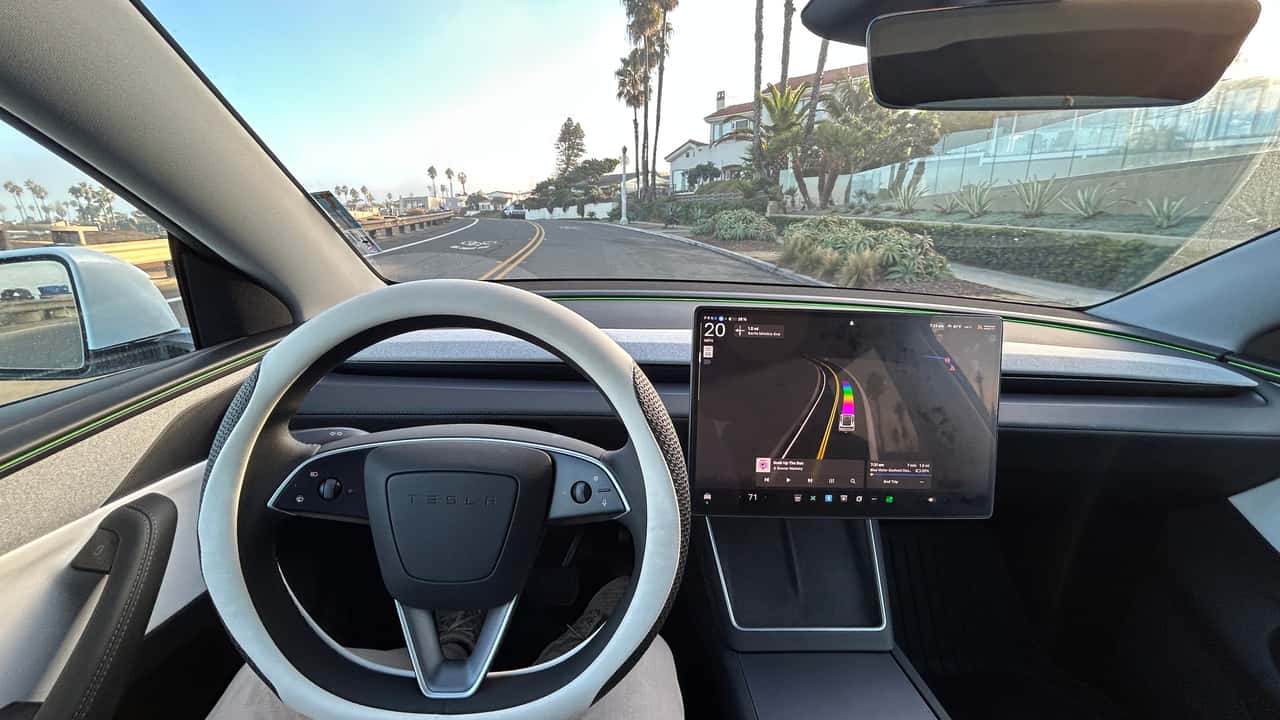
The Weekly Input begins with a trip to the north shore of Oahu to drop a son off at college. Instead of renting a traditional car at the airport, the family used Turo and rented a 2026 Tesla Model Y equipped with Full Self-Driving (Supervised).
Experiencing the technology from behind the wheel for the first time was both exhilarating and unsettling. But something interesting happened as the drive continued: trust gradually began to build.
The car merged into traffic, changed lanes, adjusted its speed, and responded to rain and other obstacles. It demonstrated capabilities that only a generation ago would have seemed like science fiction.
It wasn’t perfect.
Parking could be awkward. The vehicle didn’t always recognize the ideal parking space immediately, nor did it consistently position itself perfectly between the painted lines. Yet those imperfections raised a much bigger question.
Does intelligence have to be perfect before it becomes useful?
That question leads directly to Artificial General Intelligence—or AGI.
According to Stanford University’s Human-Centered Artificial Intelligence, AGI generally refers to AI with broad, human-level—or potentially greater—ability to learn, reason, and apply knowledge across many different tasks and domains. Unlike narrow AI designed primarily for particular tasks, AGI would be able to apply intelligence more generally.
But perhaps our expectations for artificial intelligence are sometimes unrealistic.
Humans aren’t perfect either. Drivers miss turns. Investors misread markets. Forecasts prove wrong. Experts disagree. Yet we don’t conclude that human intelligence is useless simply because it makes mistakes.
The self-driving experience offers a useful way to think about the next stage of AI.
Transformative technologies rarely arrive fully formed. They improve incrementally. People experiment with them, discover their weaknesses, improve them, and gradually begin trusting them with more important tasks.
The important question may therefore not be:
“When will artificial intelligence become perfect?”
A better question may be:
“When will artificial intelligence become useful enough to meaningfully change what humans can accomplish?”
That transition may already be underway.
What Exactly Is AGI?
“Some people call this artificial intelligence, but the reality is this technology will enhance us. So instead of artificial intelligence, I think we’ll augment our intelligence.”— Ginni Rometty
Artificial General Intelligence sounds futuristic, but the underlying idea is relatively straightforward.
The Weekly Input describes AGI as artificial intelligence with broad, general capabilities that can learn, reason, and apply knowledge across many different tasks and domains at roughly human-level capability or beyond, rather than being limited to one narrow task.
That distinction matters.
Much of the artificial intelligence we have traditionally used has been specialized. One system might recognize images. Another might recommend a movie. Another might translate languages or analyze financial information.
AGI represents something broader.
Imagine an AI system capable of taking knowledge learned in one area and applying it to a completely different problem. Instead of merely responding to one specialized instruction, it could reason across subjects, adapt to unfamiliar situations, and independently handle different types of tasks.
But defining the finish line is difficult.
There is currently no universally accepted test for AGI and no universally agreed definition of exactly what constitutes “human-level intelligence.” Some believe AGI is already beginning to emerge. Others believe it remains decades away.
That ambiguity may mean society doesn’t recognize AGI the moment it arrives.
We may identify it only afterward.
Technology often advances that way. There wasn’t one universally recognized morning when society suddenly became “digital.” Computers, the internet, smartphones, cloud computing, and eventually AI gradually became woven into everyday life.
AGI may follow a similar path.
Rather than arriving with a dramatic announcement, it may emerge through thousands of incremental improvements until one day we look back and realize:
The machines stopped being good at just one thing and became capable of helping us with almost everything.
Will We Reach AGI Soon?
AGI Does Not Equal Perfection
“Success is stumbling from failure to failure with no loss of enthusiasm.”— Winston Churchill
Artificial General Intelligence may sound like something far in the future, but the Weekly Input raises an intriguing possibility: the best frontier AI models could potentially achieve AGI by 2030. That is only a few years away.
But determining when AGI actually arrives may be harder than predicting the technology itself.
There is currently no universally accepted test for AGI or even complete agreement about what qualifies as “human-level intelligence.” Some believe AGI is already emerging, while others think it remains decades away. We may only recognize the milestone after the fact. Stanford HAI similarly notes that AGI has no universally accepted test and that definitions of human-level intelligence differ. Stanford HAI
The Weekly Input makes an important distinction: AGI does not equal perfection.
Today’s leading AI models still hallucinate, omit relevant information, and make mistakes. A self-driving vehicle may navigate traffic exceptionally well yet struggle to park perfectly between two white lines. But imperfection does not make either technology useless.
Consider a hypothetical example from the Weekly Input. Suppose future AI systems became 99.9% accurate in critical applications such as autonomous transportation, medical analysis, engineering, or physical safety, while achieving only 80% accuracy on highly theoretical or hypothetical questions. Would that be intelligent enough to qualify as AGI? Where should the line be drawn?
There may never be an AI—or a human—that perfectly predicts next month’s weather, the economy, or financial markets.
And perhaps that isn’t the standard that matters.
For consumers and investors, the more important question may be whether AI becomes capable enough to solve meaningful problems, improve productivity, augment human decision-making, and make everyday life safer and more efficient.
AGI doesn’t have to be perfect to be powerful. It only has to become useful enough to change what is possible.
Imperfect Intelligence Is Still Powerful
“If you want to increase your success rate, double your failure rate.”— Thomas J. Watson Sr.
One of the most important ideas in this Weekly Input is surprisingly simple:
Something does not have to be perfect to be incredibly useful.
We sometimes hold artificial intelligence to a standard we don’t apply to ourselves.
Humans make mistakes every day. Drivers miss exits. Weather forecasts change. Investors make incorrect predictions. Professionals sometimes disagree about the same set of facts.
Yet imperfection doesn’t make human intelligence worthless.
The same principle applies to AI.
Today’s leading models can still hallucinate—producing information that sounds plausible but is inaccurate. They can omit relevant information or misunderstand what a user is asking. Some models perform better than others at applying general knowledge across different subjects and tasks.
The self-driving experience described in the Weekly Input provides a physical example.
The vehicle could be cautious when merging, changing lanes, and adjusting its speed for rain or other obstacles while still being imperfect at something seemingly simpler: parking between two white lines.
Intelligence isn’t necessarily all or nothing.
A technology can be extraordinary at one task and mediocre at another—and still create tremendous value.
That distinction becomes especially important as AI moves into areas such as autonomous transportation, medical analysis, engineering, architecture, and other complex applications.
The Weekly Input also makes clear that human oversight remains important. AI systems can still generate inaccurate, incomplete, outdated, biased, or unsupported information, particularly in high-stakes situations.
But usefulness and perfection are two different standards.
The biggest societal benefits from AI may arrive long before AI stops making mistakes.
And that may be one of the most important lessons as we move toward AGI:
Imperfect intelligence can still be extraordinarily powerful.
BOOK A FREE CONSULT
Brianne Soscia
Certified Financial Planner™
The opinions voiced in this material are for general information only and are not intended to provide specific advice or recommendations for any individual. We suggest that you discuss your specific situation with your financial advisor prior to investing. All performance referenced is historical and is no guarantee of future results.
Investing in stock includes numerous specific risks including: the fluctuation of dividend, loss of principal and potential illiquidity of the investment in a falling market.
Dollar cost averaging involves continuous investment in securities regardless of fluctuation in price levels of such securities. An investor should consider their ability to continue purchasing through fluctuating price levels. Such a plan does not assure a profit and does not protect against loss in declining markets.
All investing involves risk including loss of principal. No strategy assures success or protects against loss.